

 Air Conditioner Scrap
 Battery Scrap
 ELECTRICAL MOTORS SCRAP
 ELECTRICAL WIRE SCRAP
 CLEAN LEAD SCRAP METAL
 BRASS SCRAP METAL
 COPPER SCRAP METAL
 STAINLESS STEEL SCRAP
 ALUMINIUM SCRAP
 SCRAP METAL RECYCLING
 SCRAP METAL REMOVAL
 CAR YARDS
 CAR REMOVAL
 VEHICLE DISPOSAL
 MONEY FOR CAR REMOVAL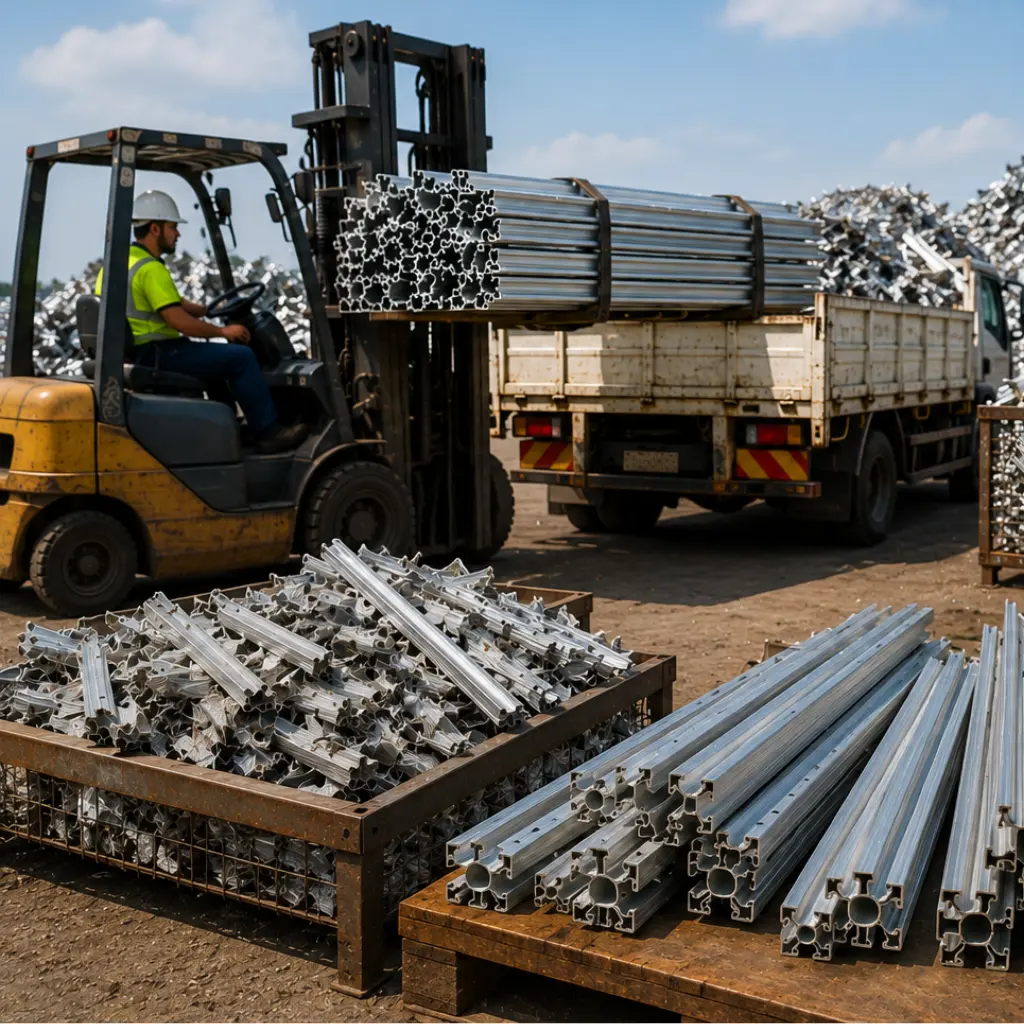
Aluminium extrusion scrap is one of the cleanest and most consistently valuable categories of non-ferrous metal that Sky Scrap Metal buys in Melbourne. Unlike mixed or cast aluminium, extrusion scrap has a narrow and predictable alloy composition that makes it easy to assess accurately, process efficiently, and sell at premium pricing in the secondary aluminium market. For businesses and tradespeople who generate it regularly, understanding the specifics of extrusion pricing is worth the effort.
The challenge is that not all aluminium extrusion scrap is treated equally by recyclers. Clean, paint-free extrusion with no steel hardware attached attracts the top price. Painted extrusion attracts slightly less. Extrusion with bolts, hinges, and inserts still in place attracts less again. And extrusion mixed in with cast aluminium or other metal types is priced as a mixed load rather than as the premium extrusion it actually is.
This guide is written for window and door fabricators, glaziers, curtain wall contractors, builders, shopfitters, commercial fit-out businesses, and anyone else in Melbourne who generates aluminium extrusion scrap on a regular basis. We cover what aluminium extrusion actually is and why it commands a premium, the specific alloy grades involved, how clean versus mixed extrusion is priced, where the most extrusion scrap comes from in Melbourne, exactly how to prepare a load for maximum return, and how to sell or arrange collection at Sky Scrap Metal.
What Is Aluminium Extrusion and Why Is It a Premium Scrap Category?
Aluminium extrusion is a manufacturing process in which heated aluminium alloy billet is forced under high pressure through a shaped steel die to produce a continuous profile with a constant cross-section. The result is an aluminium shape, such as a window frame section, a door frame, a curtain wall mullion, a structural framing member, a handrail, a cable tray, or a heat sink, that has precise dimensional consistency along its entire length.
Australia’s construction industry uses aluminium extrusion in enormous volumes. The dominant window and door system in Australian commercial and residential construction is aluminium-framed, and the country’s warm climate, large glass facades in commercial buildings, and preference for low-maintenance materials all drive ongoing demand for extruded aluminium products.
Why Extrusion Commands a Premium Over Other Aluminium Forms
Aluminium extrusion is valuable as scrap primarily because of its alloy composition. The vast majority of architectural and structural aluminium extrusion in Australia is produced from two closely related alloys: 6063 and 6061. Both are 6000 series aluminium alloys, meaning their primary alloying elements are magnesium and silicon. The 6000 series is a wrought alloy, not a casting alloy, and its composition is very precisely controlled during production.
This compositional consistency is what makes extrusion scrap valuable. Secondary aluminium producers who buy extrusion scrap know exactly what they are getting: a wrought 6000 series alloy that can be re-melted and cast or re-extruded with predictable results and minimal alloy adjustment required. Compare this to a mixed load of unidentified aluminium, which could contain any combination of wrought and casting alloys requiring significant sorting and testing before use.
The result is that clean 6063 or 6061 extrusion scrap is priced at or near the top of the aluminium scrap pricing hierarchy, consistently above mixed aluminium and typically above cast aluminium as well. For businesses generating extrusion scrap, recognising this value and presenting it accordingly is worth money.
The Key Aluminium Extrusion Alloys and Their Scrap Characteristics
Alloy 6063: The Dominant Architectural Alloy
Grade 6063 is by far the most common aluminium extrusion alloy used in architectural applications in Australia. Its composition is approximately 97 per cent aluminium with 0.2 to 0.6 per cent silicon and 0.45 to 0.9 per cent magnesium, with trace amounts of other elements. This composition gives 6063 excellent extrudability (meaning it can be formed into complex profiles with thin walls), good surface finish (making it suitable for anodising and powder coating), and adequate structural strength for most architectural applications.
In Melbourne’s scrap stream, 6063 appears primarily as window frame sections, door frame sections, insect screen frames, louvre blades, curtain wall mullions, shopfront frames, office partition systems, shower screens, and decorative architectural sections. It is the most traded extrusion alloy at Sky Scrap Metal because it is the most common in the built environment.
Alloy 6061: The Structural Extrusion Alloy
Grade 6061 has a higher silicon and magnesium content than 6063, giving it greater strength. It is used where structural loading requirements exceed what 6063 can provide: marine structures, vehicle chassis components, structural framing for industrial applications, aircraft components, and mechanical engineering parts. In Melbourne’s scrap stream, 6061 extrusion appears in industrial fabrications, engineering components, and some heavy-duty structural applications.
From a scrap perspective, 6061 is priced in the same general category as 6063. Both are 6000 series wrought alloys with similar secondary market demand. They are typically traded together as 6000 series extrusion scrap rather than being priced separately.
Other 6000 Series Variants
A range of other 6000 series alloys are produced in smaller volumes for specific applications: 6005 for road transport structural extrusions, 6082 for high-strength structural applications, and various modified grades for specialist uses. For scrap purposes, these are all assessed in the same 6000 series extrusion category alongside 6063 and 6061.
Non-6000 Series Extrusion
A small proportion of extruded aluminium is produced from alloys outside the 6000 series. For example, some high-strength aerospace extrusions use 7000 series alloys (aluminium-zinc), and some heat treatable structural shapes use 2000 series alloys (aluminium-copper). In the general Melbourne commercial scrap stream, encountering non-6000 series extrusion is uncommon. If you believe you have specialist alloy extrusion from an aerospace or defence application, mention this at the time of booking.
Clean vs Painted vs Mixed Extrusion: How It Affects Your Price
The condition and cleanliness of aluminium extrusion scrap has a direct and meaningful impact on the price per kilogram a recycler will pay. Understanding the categories helps you make informed decisions about how much preparation effort to invest before selling.
Clean, Unpainted Extrusion: Maximum Value
Clean extrusion is bright, uncoated aluminium free from any surface treatment, paint, anodise, or powder coat, with no steel hardware, no plastic end caps or corner pieces, no rubber seals, and no attached inserts. This is the scrap category that attracts the highest price per kilogram from Sky Scrap Metal.
In practice, most new extrusion scrap from a fabrication shop arrives in this category: fresh offcuts and drop pieces from production runs before any coating or hardware is applied. If your business generates extrusion at the pre-finish stage, this material is as clean as extrusion scrap gets.
Anodised Extrusion: Near the Top
Anodised aluminium has a thin electrochemical oxide layer on the surface that gives it colour and additional corrosion resistance. The anodise layer is aluminium oxide and very thin (typically 5 to 25 micrometres), adding negligible weight and no contamination from an alloy perspective. Anodised extrusion is assessed at close to the same rate as clean extrusion. The anodise layer does not meaningfully affect the secondary alloy quality.
Powder-Coated Extrusion: Slight Discount
Powder-coated extrusion is the most common form of architectural aluminium scrap from building demolition and renovation jobs. The powder coat is an organic polymer coating applied at relatively low film thickness, and while it adds a small amount of weight and requires burn-off or other processing during recycling, it does not change the aluminium alloy underneath. Powder-coated extrusion is priced slightly below clean extrusion to account for this processing requirement, but it remains a well-valued scrap category.
Extrusion with Hardware Attached: Moderate Discount
Window and door frame sections with hinges, handle fittings, lock mechanisms, rolling hardware, and steel or stainless steel screws still attached represent a mixed load of aluminium and steel. The steel hardware reduces the assessed aluminium content per kilogram of total weight and introduces contamination into the load. Removing obvious steel hardware before presenting the load produces a better per-kilogram price. The effort required to remove hinges and lock bodies from a quantity of window frames is modest relative to the pricing improvement it produces.
Mixed Extrusion (with Other Aluminium Types): Conservative Pricing
When extrusion is mixed with cast aluminium components, aluminium sheet of different alloy grades, or aluminium cable, it loses the premium attached to an identified single-grade load. A mixed aluminium load is assessed at a blended rate that is more conservative than clean extrusion pricing. If you have both extrusion and cast aluminium, presenting them in separate categories on arrival at our facility is the straightforward way to improve your total return.
Extrusion Condition | Hardware Status | Surface Treatment | Relative Price vs Clean | Notes |
Clean production offcuts | None | None (bare aluminium) | Top price | Best possible presentation |
Anodised, no hardware | None | Anodised | At or near top | Anodise is negligible contamination |
Powder-coated, hardware removed | None | Powder coat | Slight discount | Most common from renovation jobs |
Powder-coated, hardware intact | Steel hinges, locks | Powder coat | Moderate discount | Remove hardware to improve rate |
Painted (liquid paint) | Varies | Painted | Moderate discount | Similar to powder coat treatment |
Mixed with cast aluminium | Varies | Varies | Discounted (blended) | Separate extrusion from cast |
Heavily contaminated | Various | Various + coatings | Significant discount | Cleaning improves return materially |
What Does Aluminium Extrusion Scrap Pay in Melbourne?
Aluminium extrusion scrap is priced per kilogram based on the current aluminium spot price on the global commodities market, adjusted for the grade and cleanliness of the material. Clean 6000 series extrusion is priced at the top of the aluminium scrap hierarchy, consistently above mixed aluminium and generally above cast aluminium grades.
Price Disclaimer: Aluminium extrusion scrap prices are directly linked to the aluminium spot price on the London Metal Exchange (LME) aluminium contract. LME aluminium pricing moves daily and can shift materially over weeks and months. Sky Scrap Metal pays current market rates at the time of each transaction. All price indications are subject to change and do not constitute a binding quote. Contact Sky Scrap Metal directly with your material details for a current price indication. |
For a current overview of scrap pricing across all metals Sky Scrap Metal purchases, see our scrap metal prices in Melbourne 2026 guide.
Where Does Aluminium Extrusion Scrap Come From in Melbourne?
Window and Door Fabricators
Window and door fabrication is the single largest source of aluminium extrusion scrap in Melbourne. Fabricators cut frame sections, sill sections, head sections, and mullions to length for each job, generating offcuts at every cut. A fabrication shop producing 20 to 50 window and door units per day generates significant extrusion offcut volumes every week. This material is typically clean, uncoated (produced before finishing), and composed entirely of 6063 extrusion, making it the ideal extrusion scrap category.
Larger fabrication operations can generate enough extrusion offcuts to justify a weekly or fortnightly scheduled collection with Sky Scrap Metal. Smaller shops may prefer to accumulate for a month and drop off a ute load.
Glaziers and Window Installation Contractors
Glaziers cutting frame sections on site, trimming reveals, and installing window systems generate offcuts in the field. These are typically powder-coated or anodised sections from finished product, a slight step down from clean fabrication offcuts but still a well-valued category. Glaziers removing old aluminium windows during replacement jobs also generate scrap from the demolished frames.
Curtain Wall and Facade Contractors
Commercial curtain wall installations use large quantities of extruded aluminium mullions, transoms, capping sections, and pressure plates. Curtain wall contractors installing glass facades on commercial buildings generate significant extrusion scrap from site-cut offcuts and any sections that are cut to fit during installation. These sections are typically 6063 in mill or anodised finish and are clean extrusion.
Shopfitters and Commercial Fit-Out Contractors
Retail shopfitting and commercial office fit-out uses aluminium extrusion extensively in partition systems, door frames, display shelving, ceiling grid systems, and specialist display fixtures. Shopfitters stripping out old fit-outs and installing new ones generate extrusion scrap from demolition on one hand and offcuts from new installation on the other.
Builders and Renovation Contractors
Residential and commercial renovation projects that involve window replacement, extension builds, or new construction generate aluminium extrusion scrap from the construction activity. Builders accumulating scrap across multiple concurrent projects benefit from a regular pick-up arrangement. For a full guide to managing scrap on construction and renovation jobs, see our article on scrap metal recycling for builders and renovation projects in Melbourne.
Industrial Fabricators and Manufacturers
Businesses fabricating industrial equipment, conveyor systems, machine guards, access platforms, and structural frameworks using aluminium extrusion generate offcuts and drops as a normal part of production. These are typically clean extrusion from 6061 or similar structural grades and are among the best-quality extrusion scrap available.
Demolition Contractors
Commercial building demolitions and strip-outs generate aluminium extrusion from curtain wall facades, window systems, architectural features, and office fit-out components. Demolition loads typically involve powder-coated or anodised extrusion with hardware attached, which is a lower grade than fabrication offcuts but still valuable in volume.
How to Prepare Aluminium Extrusion Scrap to Maximise Your Return
The difference in price between a clean extrusion load and a contaminated mixed load is meaningful. These preparation steps produce the best result:
- Remove steel hardware from window and door frames. Hinges, lock bodies, handle sets, and steel corner keys are the main steel components in aluminium window and door frames. Removing them before you bring a load in is the single most impactful preparation step. A flathead screwdriver and a few minutes is all it takes for most hardware types.
- Remove plastic components. Corner pieces, end caps, weather strip carriers, and glazing beads in architectural systems are often plastic or rubber. These add weight without adding aluminium value and slow down processing. Remove them where straightforward.
- Keep extrusion separate from cast aluminium. If you have both extrusion offcuts and cast aluminium components such as engine parts or machinery castings, keep them in clearly separated groups. Presenting them together as mixed aluminium means both categories are priced at the lower blended rate.
- Keep extrusion separate from aluminium sheet. Aluminium sheet (3000 or 5000 series) is a different alloy category from 6000 series extrusion. They are both good categories but they are priced separately. Keep them apart for the best return on each.
- Bundle or stack extrusion to reduce volume. Loose, tangled extrusion takes up more truck space and is harder to weigh accurately. Stacking straight sections together or bundling them with strapping makes the load easier to handle and assess. For short offcuts, collecting them in a bulk bag or bin rather than loose is helpful.
- Label your loads by category if you have multiple types. If you are delivering a mixed collection that includes extrusion, cast, and sheet, putting them in separate piles or bins and labelling them means the assessment on arrival is faster and more accurate. This directly translates to a better outcome for both parties.
How to Sell Aluminium Extrusion Scrap at Sky Scrap Metal
Drop-Off at Our Dandenong Facility
Drop-off during business hours is the most common option for fabricators, glaziers, builders, and tradespeople in Melbourne’s south east. Drive in with your load, we weigh and assess each category separately, and you receive payment the same day. For loads where you have both extrusion and other aluminium or metal types, we assess each element and combine the payment. There is no minimum quantity for drop-off.
Scheduled Pick-Up for Fabrication Businesses
Window and door fabricators, curtain wall contractors, and industrial fabricators generating consistent weekly or fortnightly volumes of extrusion scrap benefit from a scheduled collection arrangement. Sky Scrap Metal can establish a regular pick-up schedule that aligns with your production cycle, removing the need to manage transport. Scheduled collection clients typically receive commercial account pricing and receive payment by bank transfer.
Bulk Collection for Demolition and Strip-Out Jobs
Demolition contractors and fit-out businesses with large one-off volumes from a specific project can arrange a bulk collection timed to coincide with the project’s strip-out schedule. Contact Sky Scrap Metal with the approximate volume, the type of extrusion (curtain wall, window frames, fit-out sections), the site address, and the project timeline. We will arrange a collection that fits around your site access windows.
The Environmental Significance of Recycling Aluminium Extrusion
Aluminium extrusion recycling is among the most environmentally efficient recycling activities available. The Aluminium Council of Australia highlights that recycling aluminium requires approximately 95 per cent less energy than producing primary aluminium from bauxite ore. For 6000 series extrusion in particular, the recycling process is especially efficient because the alloy composition is clean and consistent, requiring minimal reprocessing before the aluminium can be re-cast or re-extruded.
Aluminium also retains its properties through recycling indefinitely. Unlike some materials that degrade with each recycling cycle, aluminium alloy can be recycled repeatedly without loss of quality. The 6063 window frame section you bring to Sky Scrap Metal today could be re-extruded into a new window frame section, contributing to a new building in Melbourne within months.
For fabricators and construction businesses tracking their environmental credentials, the recycling of aluminium offcuts and scrap is one of the most quantifiably beneficial sustainability actions available. Every tonne of aluminium extrusion recycled avoids the environmental footprint of producing that tonne from raw materials.
Frequently Asked Questions About Aluminium Extrusion Scrap in Melbourne
Question | Answer |
How much does aluminium extrusion scrap pay in Melbourne? | Aluminium extrusion scrap is priced per kilogram based on the current LME aluminium spot price and the condition and cleanliness of your material. Clean, unpainted extrusion attracts the top aluminium scrap price. Contact Sky Scrap Metal with details of your material for a current price indication. |
Is aluminium extrusion worth more than general mixed aluminium? | Yes. Clean, identified 6000 series extrusion consistently attracts a higher per-kilogram price than mixed or unidentified aluminium because of its consistent and well-characterised alloy composition. Separating your extrusion from other aluminium types is worth doing. |
Do I need to remove the powder coat from window frames before bringing them in? | No. Powder-coated extrusion is accepted and priced appropriately. You do not need to strip the coating. The main preparation step that improves your return is removing steel hardware such as hinges and locks, not removing the coating. |
Does it matter whether my extrusion is 6063 or 6061? | For scrap pricing purposes, 6063 and 6061 are assessed in the same 6000 series extrusion category. The pricing difference between these two alloys is negligible in the scrap context. Both are desirable secondary market materials. |
Can I mix extrusion offcuts with full window frame sections in the same load? | Yes. Offcuts and full sections are the same alloy and assessed in the same category. The only thing that affects pricing within an extrusion load is the condition (clean versus painted versus hardware-attached), not the length or shape of the pieces. |
What is the minimum quantity I can bring in? | There is no minimum quantity for drop-off. You can bring in a single bag of offcuts if that is what you have. Volume does affect per-kilogram rates, but small loads are accepted without restriction. |
Do you offer free pick-up for extrusion scrap? | Free pick-up is available for loads of sufficient volume. Given that extrusion is a high-value aluminium category, the threshold for free pick-up is lower than for lower-value metals. Contact us with your estimated volume and suburb to confirm. |
Can I bring extrusion scrap that still has glazing tape and weatherstrip attached? | Yes. Glazing tape and rubber weatherstrip are accepted with the frames. Removing them improves your assessed aluminium weight slightly, but the improvement is modest for residential quantities. For large commercial volumes, removing rubber strips does improve the return. |
How is extrusion priced differently from cast aluminium? | Extrusion alloys (6000 series wrought) and casting alloys (typically 300 series) are separate categories in the aluminium scrap market. Both are desirable, but they have different compositions and different secondary market values. Extrusion typically prices at or above casting alloy. |
Do you accept aluminium curtain wall components including pressure plates and cappings? | Yes. All curtain wall aluminium components including mullions, transoms, pressure plates, and cappings are accepted. These are typically 6063 extrusion in mill or anodised finish and are assessed at the appropriate extrusion rate. |
What about aluminium cable tray and unistrut from electrical installations? | Aluminium cable tray and strut are accepted as aluminium extrusion and assessed accordingly. These are typically clean 6000 series extrusion and are a well-valued scrap category. |
Can I sell aluminium scaffolding tube and adjustable props? | Yes. Aluminium scaffolding tube is typically 6000 series extrusion and is accepted and priced accordingly. Adjustable props and accessories with steel components attached should have the steel removed where practical. |
How quickly can a pick-up be arranged for a fabrication business in Melbourne’s south east? | Most collection bookings in Melbourne’s south east industrial corridor can be arranged within two to four business days. For established account clients, we work to accommodate preferred collection days and can often turn around a booking faster. |
Do you provide documentation for extrusion scrap sales? | Yes. Sky Scrap Metal provides a weight ticket and transaction record for all sales. For fabrication businesses and construction contractors, this documentation is useful for accounting, asset disposal recording, and environmental reporting. |
What is the best way for a fabrication shop to manage extrusion scrap on the factory floor? | A dedicated bin or stillage for extrusion offcuts, positioned near cutting equipment, keeps the scrap stream clean and separate from other materials. Regular collection before the bin overflows keeps the production area tidy and the scrap value consistent. Some fabricators set up separate bins for pre-finish offcuts versus post-finish material to keep the two grades separate. |
Related Reading
How much is scrap aluminium worth in Melbourne?
Aluminium recycling in Melbourne: what to bring, how pick-up works, and current rates
Scrap metal recycling for builders and renovation projects in Melbourne
Sell Your Aluminium Extrusion Scrap at Sky Scrap Metal
Sky Scrap Metal buys aluminium extrusion scrap of all types from fabricators, glaziers, builders, curtain wall contractors, shopfitters, and industrial businesses across Melbourne. We pay current market rates for clean and painted extrusion, provide same-day payment for drop-offs, and offer scheduled commercial collection for businesses with ongoing volumes.
Our facility is based in Dandenong and we service the south east corridor and greater Melbourne for both drop-off and collection. Contact us with details of your extrusion type and volume for a current price indication, and we will arrange the most convenient option for your business.