


 Air Conditioner Scrap
 Battery Scrap
 ELECTRICAL MOTORS SCRAP
 ELECTRICAL WIRE SCRAP
 CLEAN LEAD SCRAP METAL
 BRASS SCRAP METAL
 COPPER SCRAP METAL
 STAINLESS STEEL SCRAP
 ALUMINIUM SCRAP
 SCRAP METAL RECYCLING
 SCRAP METAL REMOVAL
 CAR YARDS
 CAR REMOVAL
 VEHICLE DISPOSAL
 MONEY FOR CAR REMOVAL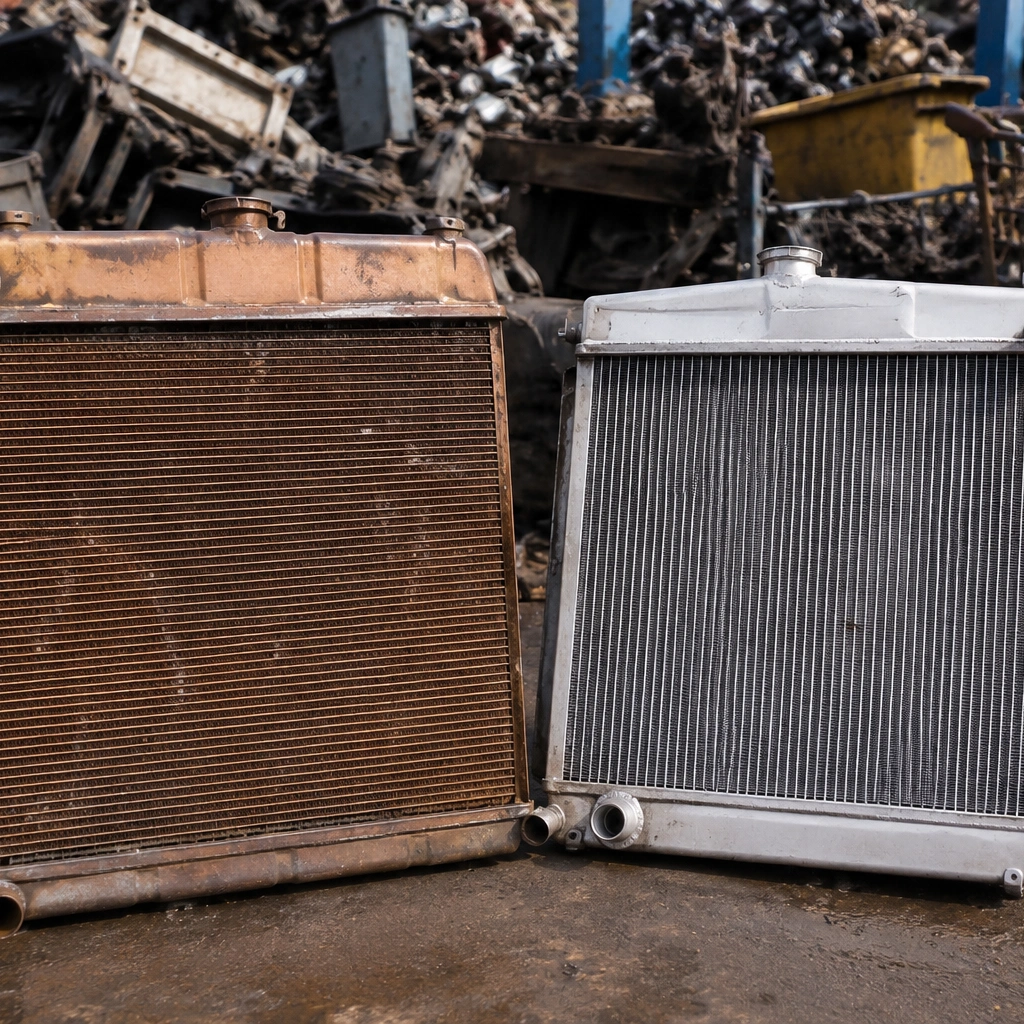
An old radiator is one of those items that sits at the back of the shed for years because nobody is quite sure what to do with it. It is not exactly rubbish, but it is not obviously valuable either, at least not until you know what you are actually looking at. The truth is that a radiator can be one of the more worthwhile single items in a scrap load, but what it is worth depends almost entirely on which of the two main types you have.
Two Very Different Radiators
Broadly speaking, there are two kinds of car radiators you are likely to come across as scrap: the older copper and brass style, and the aluminium style used in most vehicles built from the 1990s onward. They look different, they are built differently, and critically, they are priced quite differently at a scrap yard.
Older vehicles, along with a fair amount of agricultural and industrial equipment, used radiators built from copper tubes with brass tanks at each end, all joined together with lead solder. These radiators are heavier, more expensive to manufacture, and considerably more valuable as scrap because of their copper content.
From the 1990s onward, manufacturers largely shifted to aluminium radiators with plastic end tanks, mainly to save weight and cost. These are still valuable as scrap, just priced as aluminium rather than copper, which puts them well below a copper radiator on a per kilogram basis.
Copper and Brass vs Aluminium: A Side by Side Comparison
Copper / Brass Radiator | Aluminium Radiator | |
Typically found in | Older vehicles, pre 1990s, and some industrial or agricultural equipment | Most vehicles made from the 1990s onward |
Core material | Copper tubes with brass tanks and fins, joined with lead solder | Aluminium tubes and fins, usually with plastic end tanks |
How it’s priced | By copper content, as a radiator specific grade below clean copper | As aluminium scrap, once plastic tanks are removed |
Relative value | Higher per kilogram, since copper is the more valuable base metal | Lower per kilogram than copper radiators, but still a solid aluminium grade |
Weight | Heavier for a given size | Lighter, which is part of why manufacturers switched to it |
How to Tell Which One You’ve Got
If you are not sure which type of radiator you are holding, a few quick checks will usually settle it.
- Colour: copper has a distinct reddish orange tone, while aluminium is a dull silver grey.
- Weight: copper and brass radiators are noticeably heavier for their size than an aluminium equivalent.
- The tanks: older copper and brass radiators typically have metal tanks at each end, often visibly soldered. Aluminium radiators almost always have black plastic tanks crimped onto the aluminium core.
- The vehicle’s age: as a rough rule of thumb, anything from a car built before the early 1990s is more likely to be copper and brass, while later model vehicles are almost always aluminium.
If you are still not certain, most scrap yards are happy to identify it for you from a photo before you commit to bringing it in.
What Each Type Is Worth
Copper and brass radiators are priced according to their copper content rather than as clean copper outright, since the lead solder and brass tanks reduce the overall purity of the load. Even so, they sit well above aluminium radiators on a per kilogram basis, simply because copper itself is worth several times more than aluminium at current Melbourne rates.
Aluminium radiators are priced as aluminium scrap once the plastic tanks are removed, generally landing in a similar range to other cast or mixed aluminium items. They are not as valuable per kilogram as a copper radiator, but they are still a genuinely worthwhile item to bring in rather than send to landfill, particularly if you have more than one.
As with every metal on this site, these are general indications only. Copper and aluminium prices both move daily, so it is worth calling ahead for a current rate if you are bringing in a radiator or several.
Preparing a Radiator for Scrap
- Drain any remaining coolant completely before transporting the radiator, both for safety and because scrap yards cannot accept radiators with fluid still inside.
- Remove the plastic end tanks from an aluminium radiator if you are able to, since this leaves clean aluminium core rather than a mixed aluminium and plastic item.
- Leave copper and brass radiators intact rather than trying to separate the components yourself, since the yard will assess the whole unit based on its copper content.
- Handle old coolant carefully and dispose of it properly, since it is not something that should go down a household drain or onto the ground.
- If the radiator is still attached to other engine parts or hoses, remove what you reasonably can, since mixed materials slow down processing and can affect how the load is assessed.
Where to Sell Radiator Scrap in Melbourne
Radiators can be brought in alongside any other scrap metal you might have, whether that is from a car you are dismantling, a workshop clear out, or general shed cleaning. Sky Scrap Metal, based at 297 Hammond Road, Dandenong, accepts both copper and brass radiators and aluminium radiators, and will identify and price yours on the spot once it has been weighed. Call 0402 757 290 or 03 8753 6373 ahead of time if you would like an estimate before making the trip, particularly if you have several radiators or a mixed load from a larger vehicle clean out.
Frequently Asked Questions
Q. How do I know if my radiator is copper or aluminium without taking it apart?
Colour and weight are the quickest indicators. Copper and brass radiators have a reddish tone and feel noticeably heavier, while aluminium radiators are a dull silver grey and considerably lighter for their size.
Q. Do I need to remove the plastic tanks from an aluminium radiator myself?
It helps but is not essential. Removing the plastic tanks yourself leaves a cleaner aluminium load, but most yards will still accept the radiator intact and account for the plastic weight during assessment.
Q. Is a copper radiator always worth more than an aluminium one?
Generally yes, since copper is priced considerably higher per kilogram than aluminium on the current market, though the exact difference depends on the size and condition of the specific radiators being compared.
Q. Can I bring in a radiator that still has coolant in it?
No, coolant needs to be drained beforehand. It is a safety and handling requirement at scrap yards, and it also means you are not paying to transport liquid weight that has no scrap value.
Q. Are radiators from trucks and machinery priced the same way as car radiators?
The same copper versus aluminium principle applies, though larger truck and machinery radiators obviously weigh more and can be a genuinely significant item in a load, so it is worth calling ahead if you have one.